
The workforce is changing. More Americans are working as freelancers, independent contractors, gig workers, and self-employed professionals than ever before. While flexibility has increased, access to traditional employer-sponsored benefits has not always kept pace.
That’s where portable benefits come in.
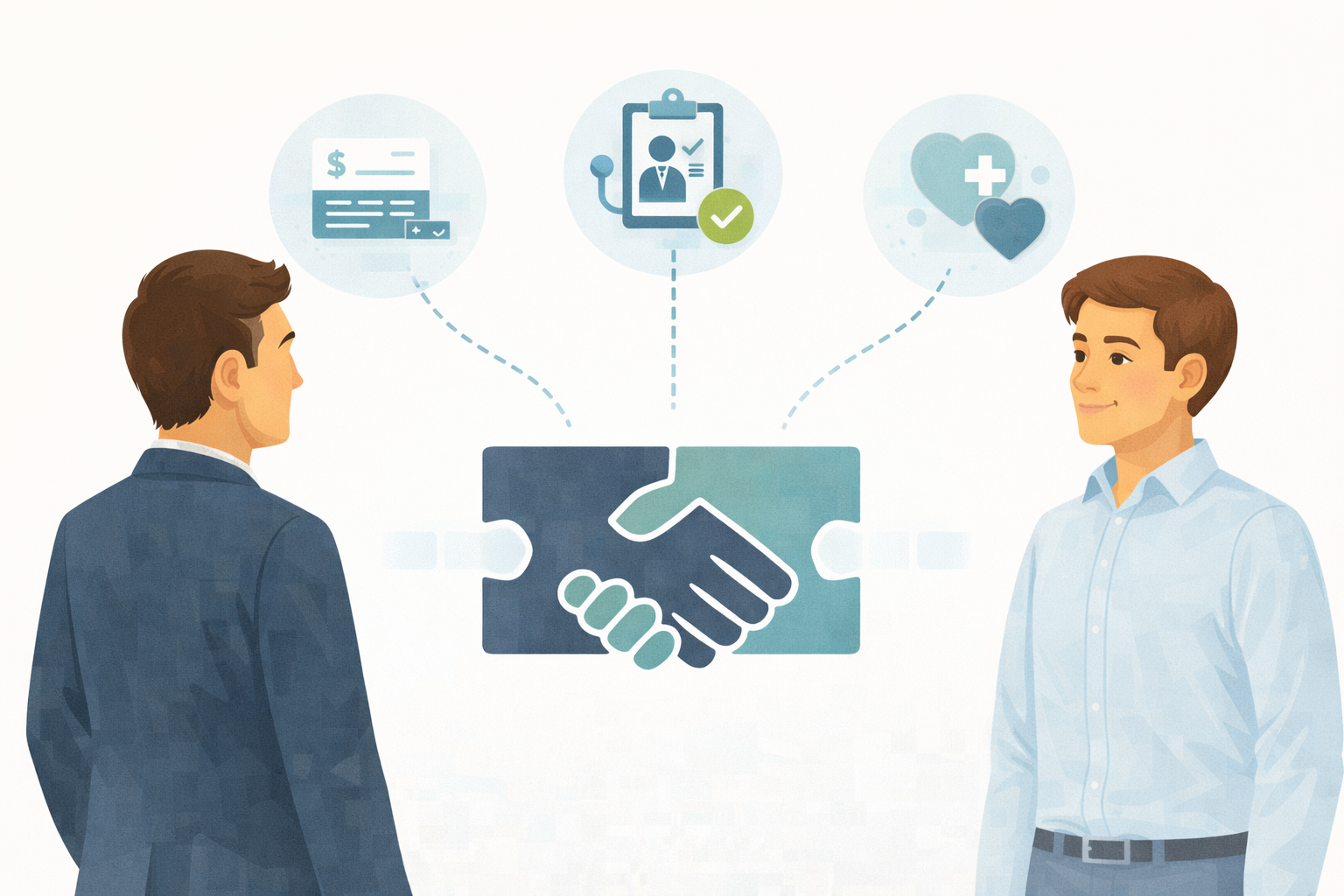
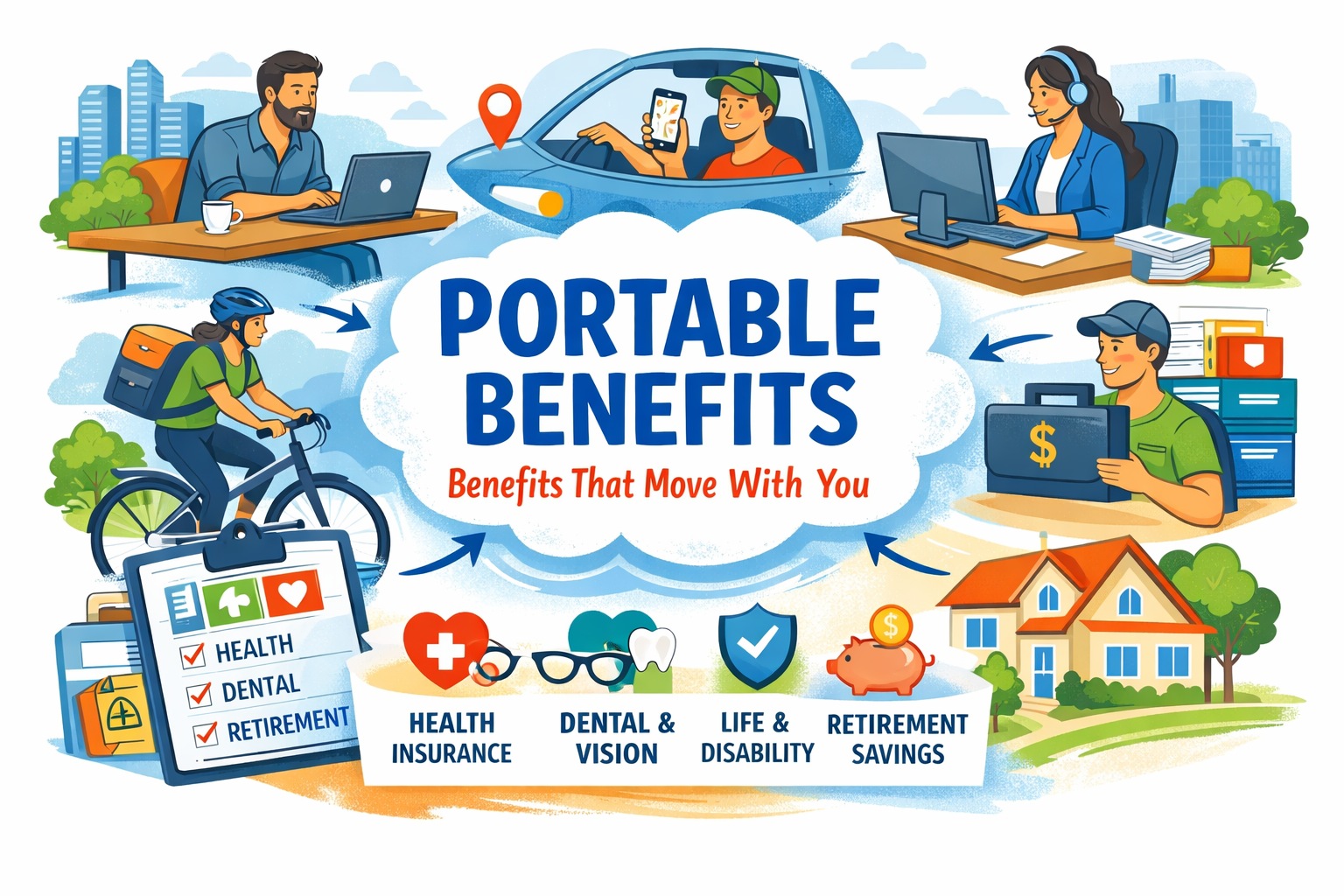
Portable benefits allow modern workers access to health insurance, retirement funds, and other coverage options that move with them across jobs—without being tied to a single employer.
What are Portable Benefits?
Portable benefits are benefits attached to the individual, not the employer.
Unlike traditional employer-sponsored group health insurance, which ends when you leave your job, portable benefits stay with you as you move between employers, clients, gigs, or projects.
Portable benefits can include:
- Health insurance
- Dental and vision insurance
- Life insurance
- Disability coverage
- Retirement savings options
The core idea is simple: your work may change, but your benefits don’t have to.
Why Portable Benefits Matter
Today’s workforce includes:
- Freelancers and consultants
- Rideshare and delivery drivers
- Real estate agents
- Creators and independent professionals
- Small business owners and employees
- Part-time and contract workers
These workers typically do not receive traditional employer-sponsored benefits. That means they must:
- Shop for individual health insurance
- Manage enrollment timelines themselves
- Understand subsidies and tax credits
- Coordinate coverage during income fluctuations
Portable benefit models simplify the process by centering coverage on the individual.
Portable Benefits vs. Traditional Group Health Insurance
Here’s how portable benefits compare to employer-sponsored group coverage.
For many small businesses, especially early-stage companies, portable benefits paired with health stipends or HRAs (Health Reimbursement Arrangements) can create a more scalable solution.
Is a Portable Benefits Model Right for You?
Careers are less linear. Income streams are more diversified. Many professionals work across multiple platforms or clients at once. Benefits that travel with the worker better align with that reality. As the workforce evolves, benefit strategies must evolve as well.
If you are one of the following, it’s worth stepping back and evaluating your options:
- A freelancer or independent professional buying coverage on your own
- A gig worker navigating Marketplace enrollment
- A startup founder working with contractors
- A small employer evaluating stipends vs. group insurance
Portable benefits are not one-size-fits-all. But for many independent workers and modern employers, they represent a smarter way to align health insurance with how work actually happens today.
At LegUp Health, our role is to provide unbiased guidance so you can confidently compare individual coverage, group health insurance, and stipend-based models. Book a consultation today.