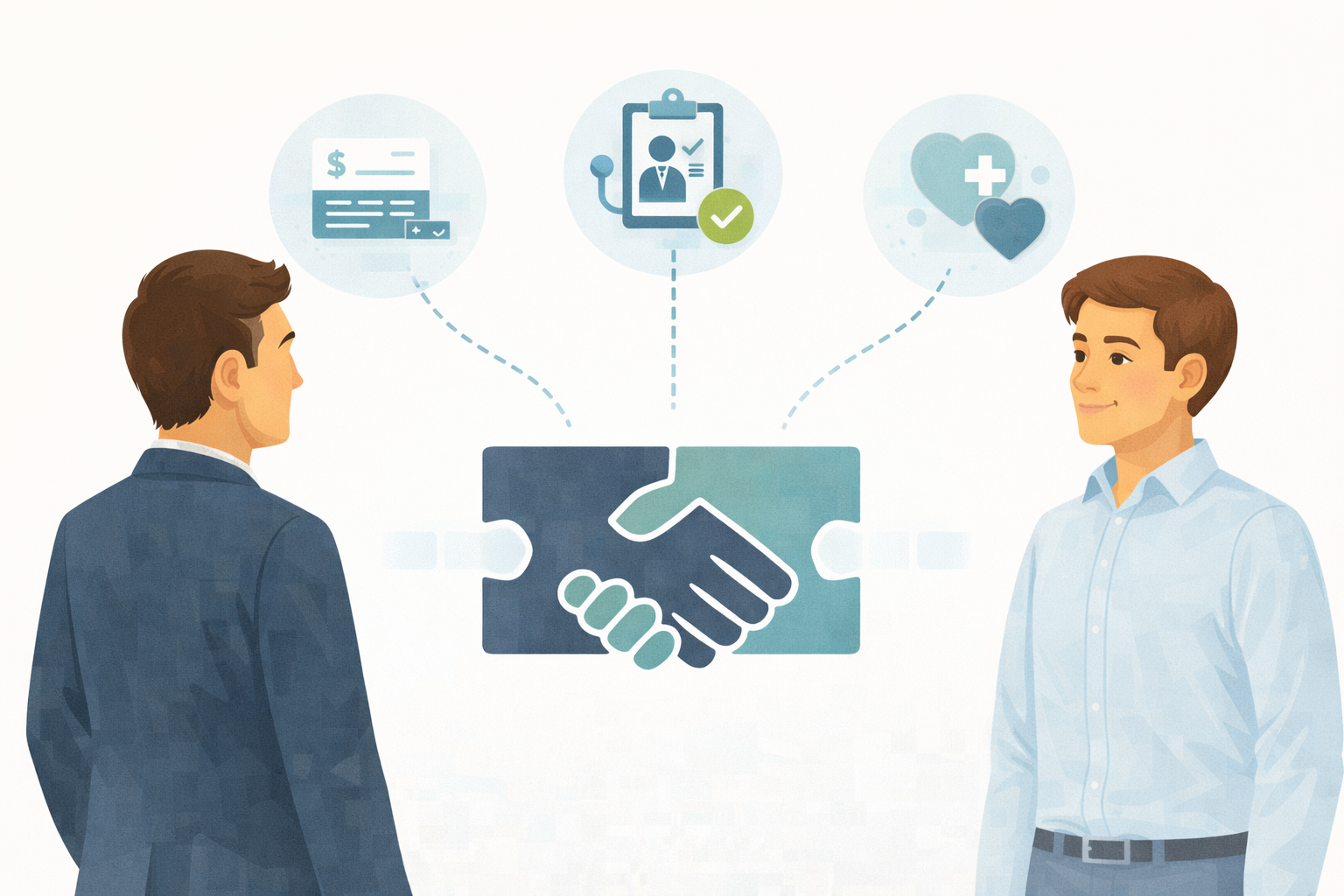

A Professional Employer Organization (PEO) is a service provider that helps small and mid-sized businesses handle payroll, human resources (HR), and employee benefits through a co-employment model. In a co-employment arrangement, the PEO becomes the employer of record for certain administrative purposes (like payroll tax filings), while your business remains the employer for day-to-day work management.
How Does a PEO Work?
In most PEO arrangements, you and your business continue to handle:
- Recruiting and hiring employees
- Managing schedules, performance, and job duties
- Setting compensation (within the PEO’s system)
- Making final decisions on promotions and terminations
Meanwhile, the PEO typically handles HR administration such as:
- Running payroll and supporting payroll tax filings
- Providing HR tools and guidance (handbooks, onboarding, policies)
- Offering access to employee benefits and handling enrollment administration
- Supporting certain compliance and risk management workflows
What Is “Co-Employment” in Plain English?
Co-employment can sound confusing. In practice, it means employees work for your company every day while the PEO shares certain employer responsibilities to help you administer benefits and stay compliant.
A good way to think about it is that you keep day-to-day management, while the PEO takes on a meaningful portion of HR and payroll administration. The exact division of responsibilities varies by provider and contract.
What Services Do PEOs Usually Provide?
A PEO is not only about insurance. It typically bundles payroll, HR, and benefits into one relationship. Specific services vary by provider, and contracts can differ meaningfully. Many PEOs offer services such as:
- Payroll processing and payroll tax filing support
- HR support and documentation (policies, onboarding)
- Benefits administration (health, dental, vision, retirement)
- Compliance assistance (for example, training, notices, and recordkeeping)
Why Do Small Businesses Use a PEO?
Small businesses often consider a PEO when they want to:
- Reduce HR and payroll administrative workload
- Get help navigating compliance requirements
- Improve the employee benefits experience (enrollment, support, and communications)
- Offer benefits through a bundled approach instead of piecing together vendors
When a PEO May Not Be the Best Fit
A PEO may be less attractive if:
- You only need one function (like payroll) and do not want a bundle
- The provider’s contract minimums, fees, or terms do not match your budget
- You already have strong internal HR support and prefer separate best-in-class tools
PEO vs. Payroll Platforms vs. Administrative Services Only (ASO) firms
Some payroll and HR platforms can handle payroll, onboarding, and basic HR workflows without a co-employment model. Some businesses compare PEOs to an Administrative Services Only (ASO) firm.
PEO:
- Requires a co-employment arrangement
- Typically bundles payroll, HR support, and benefits administration
- May provide more hands-on HR guidance and compliance support
Payroll platform:
- Your business remains the sole employer of record for administrative purposes
- Often more modular (you choose payroll, benefits admin, and HR tools separately)
- Can be a good fit if you want flexibility and already have HR support
ASO:
- Does not involve co-employment
- Typically provides HR support services and tools
- Often pairs with a separate payroll provider and a separate benefits approach
How to Choose a PEO
When comparing options, consider:
- Total cost (base fee, per-employee fees, and any add-ons)
- Contract length, termination terms, and renewal process
- Benefits approach and employee experience
- HR service level (advice, templates, dedicated support, response times)
- Technology platform usability
How Much Does a PEO Cost?
PEO pricing varies widely by provider and the services you include. In general, pricing is structured as a per-employee-per-month fee or a percentage of payroll.
The best way to understand total cost is to request a proposal that clearly lists base fees, per-employee fees, benefits-related charges, and any add-ons.
Frequently Asked Questions (FAQs)
Does a PEO mean I lose control of my employees?
Usually no. In most arrangements, your business still manages day-to-day work, and the PEO focuses on administrative responsibilities. Co-employment does not mean the PEO runs your team.
Is a PEO the same as a staffing agency?
No. Staffing agencies supply workers. A PEO supports your existing employees with HR, payroll, and benefits administration.
Do PEOs always include health insurance?
Many do, but benefit offerings and structures vary. Some PEOs bundle multiple benefit lines, while others allow more customization.
Need Help Evaluating PEO Options?
LegUp Health can help you compare PEOs as a benefits option.** We will walk through plan design, costs, employee experience, and tradeoffs so you can choose the right fit for your business. Request a quote today!