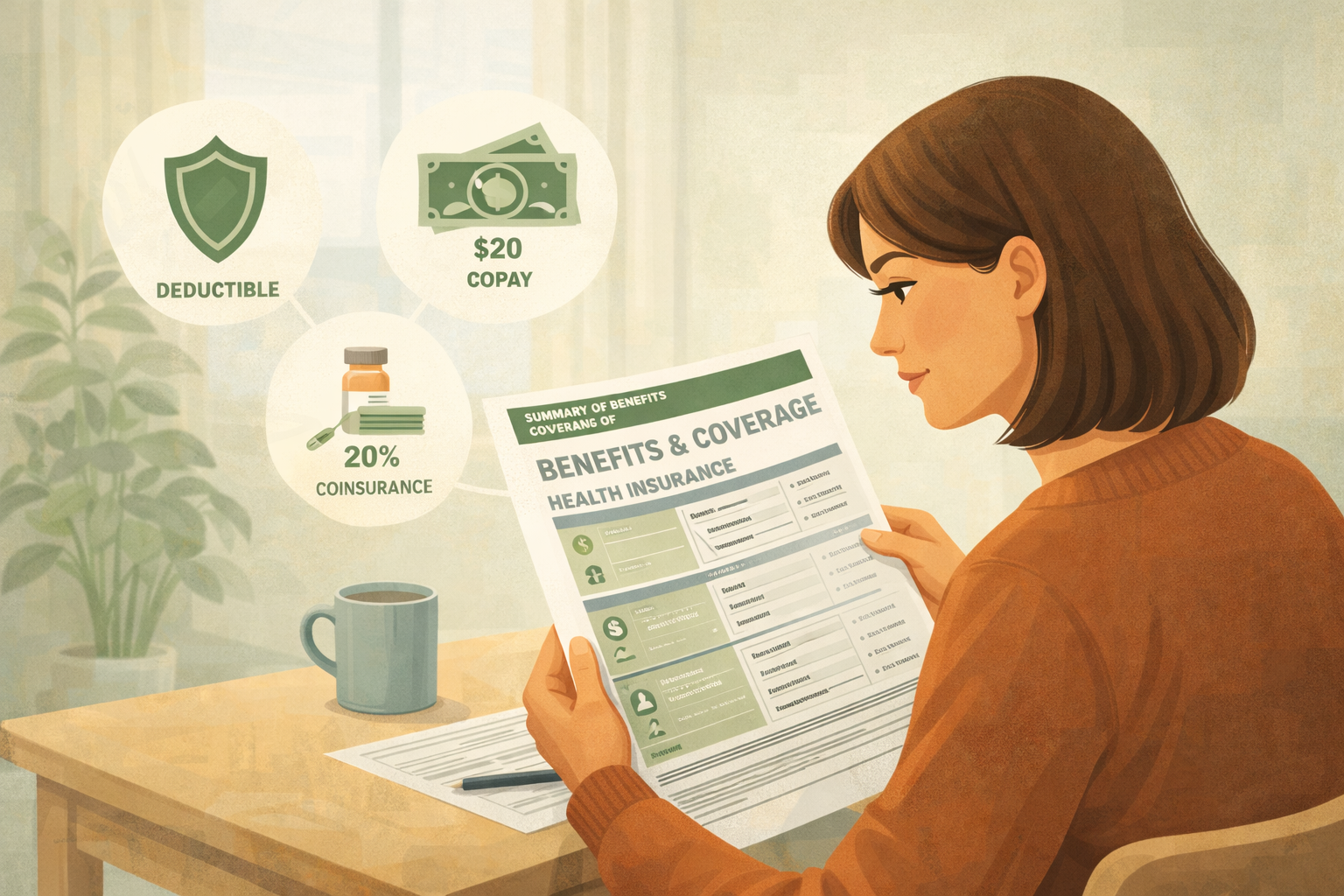

A Summary of Benefits and Coverage (SBC) is a short, standardized document that health insurance plan providers must provide. It is designed to help you understand, in plain language, what the health plan covers and how much you might pay for various services.
Because SBCs use a consistent format, they are one of the easiest ways to compare plans side-by-side.
What Information Is Included In An SBC?
While the exact details vary by plan, an SBC typically includes:
- Covered services and how the plan generally pays for them
- Your deductible
- Your copayments and coinsurance (i.e., cost-sharing)
- The plan's out-of-pocket maximum
- Whether certain services are covered before the deductible
- Limitations and exceptions (things the plan does not cover, or covers differently)
- A section on prescription drug coverage and other common categories
SBCs also include a glossary reference and standardized "coverage examples."
How Is an SBC Different From a Plan Brochure or Policy?
An SBC is not the full contract. Think of it like the plan's high-level summary:
- SBC: A standardized snapshot for comparing plans.
- Policy/certificate of coverage/plan documents: The detailed legal documents with all rules, definitions, and exclusions.
- Provider directory/formulary: Separate resources that tell you which doctors and drugs are covered.
If something is unclear or you need the fine print, use the SBC as your starting point, then confirm details in the plan documents.
Where Can You Find Your SBC?
You can usually find an SBC:
- In your employer's benefits portal during open enrollment
- Inside your insurance carrier member portal
- Attached to the plan materials when you buy coverage directly
- From your broker or benefits administrator on request
How To Read An SBC
If you only have a few minutes, focus on these areas:
1. Key Numbers: Deductible And Out-of-Pocket Maximum
Two of the most important cost numbers on an SBC are:
- Deductible: What you may pay before the plan starts sharing costs for many services.
- Out-of-pocket maximum: The most you typically pay in a plan year for covered, in-network cost-sharing.
Related reading: What is health insurance cost-sharing?
2. Cost-Sharing For Common Services
Look for how the plan covers common categories, such as:
- Primary care and specialist visits
- Urgent care and emergency room
- Lab work and imaging
- Hospitalization
- Mental health and substance use services
The SBC will usually show whether you pay a copay, coinsurance, or the full cost until you meet the deductible.
3. What Services Are Covered Before The Deductible?
Many plans cover certain services pre-deductible, especially preventive care (like annual physicals and recommended screenings). The SBC often highlights this.
4. Coverage Examples (A Quick Way To Compare Plans)
SBCs include standardized "coverage examples" (like a simple pregnancy or diabetes scenario). These examples are not a prediction of your personal costs, but they can help you compare how plans tend to behave.
Common Gotchas To Watch For
When comparing SBCs, pay extra attention to:
- In-network vs out-of-network cost-sharing
- Whether the plan has a separate prescription deductible
- Whether there are separate deductibles for individuals vs families
- Notes about limitations, exclusions, and required prior authorizations
Bottom Line
An SBC is one of the best tools you have for comparing health plans because it puts key coverage details and cost-sharing in a standardized format. Use it to compare deductibles, copays, coinsurance, and out-of-pocket maximums, then confirm details in the plan's full documents if you have questions.
If you are unsure how to interpret an SBC for your situation, it can help to walk through it with a benefits advisor, such as LegUp Health. Book a consultation any time!